Interview with Urban Writing Haus Co-founder Joy Waller

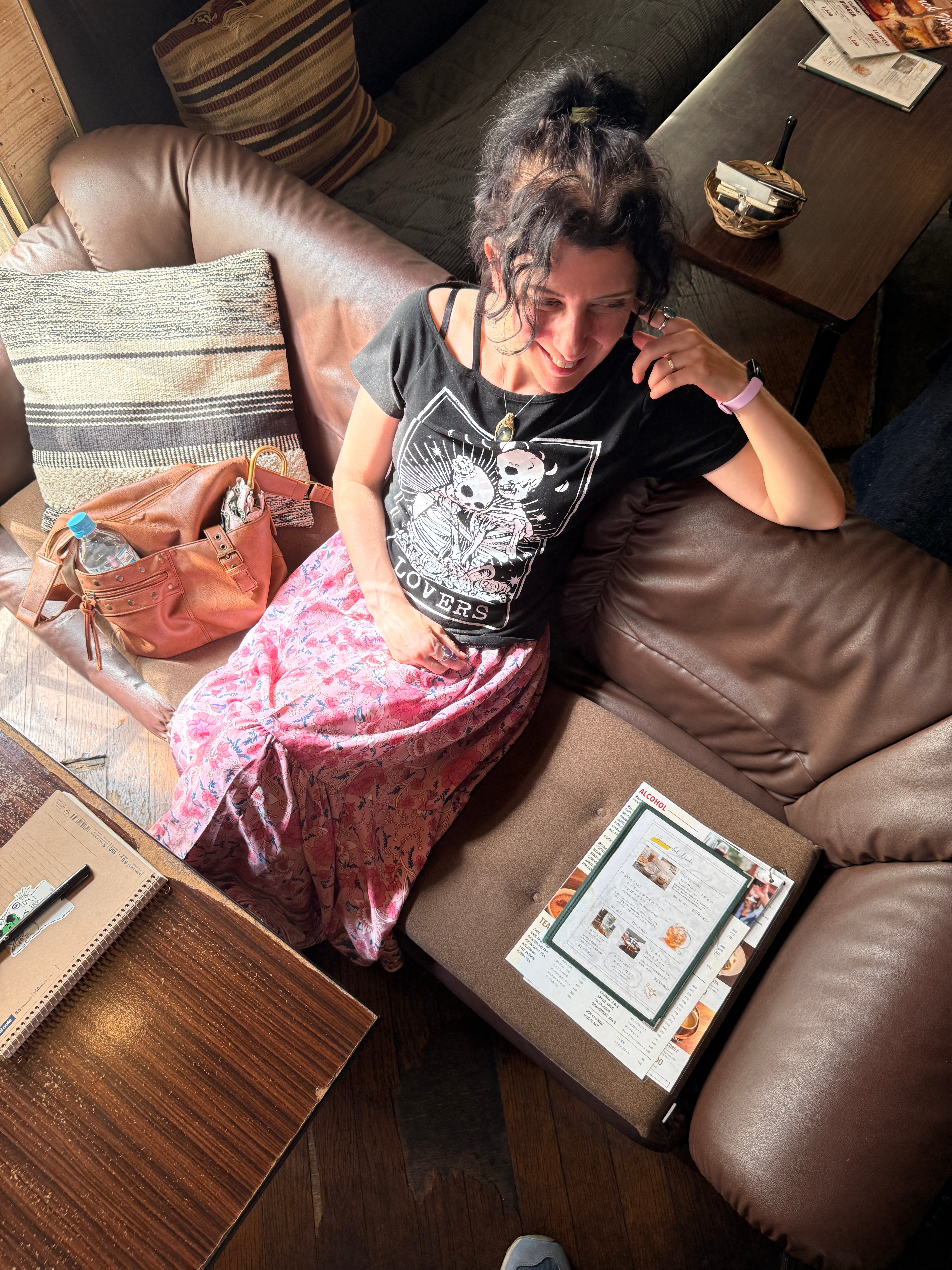
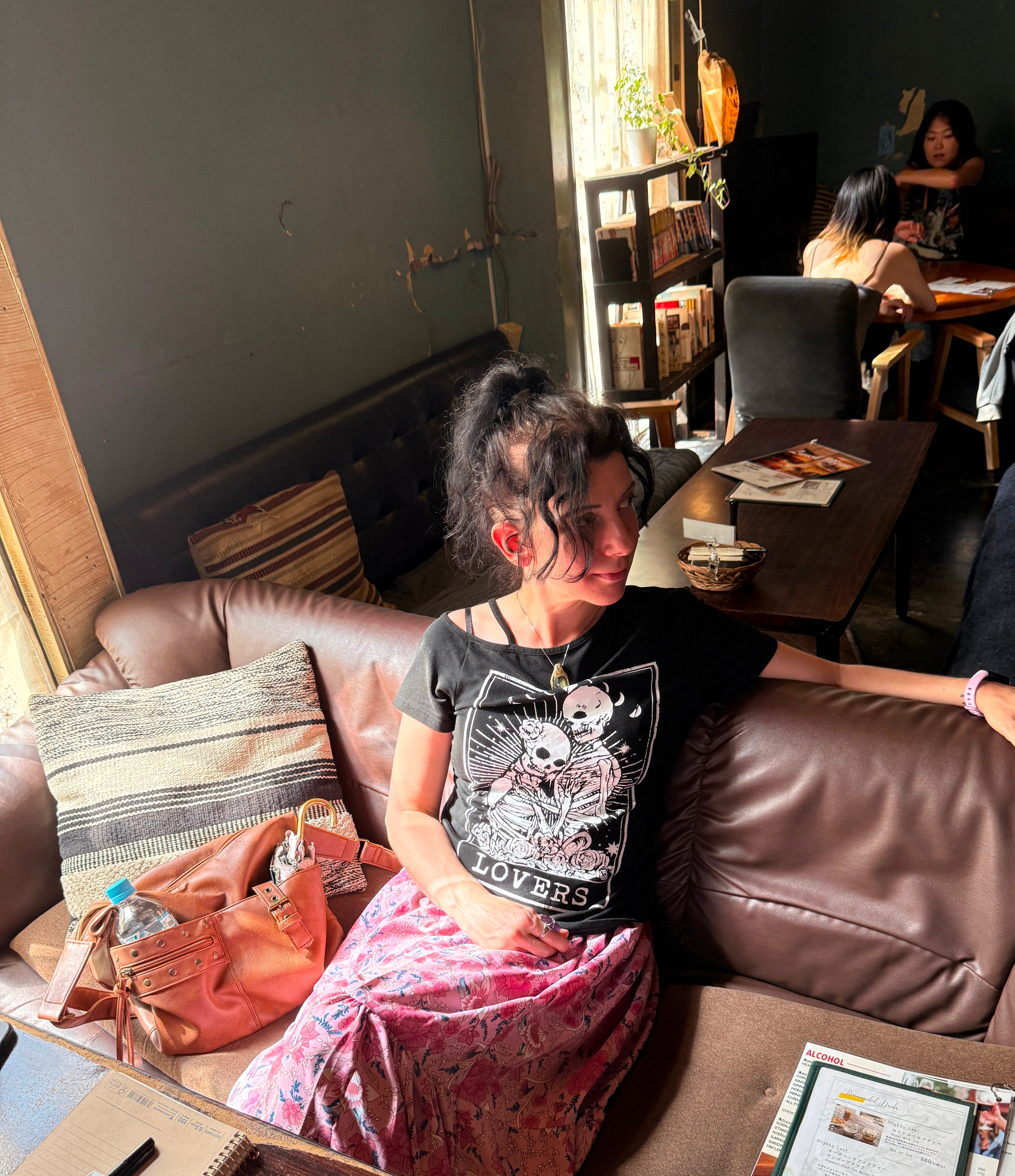
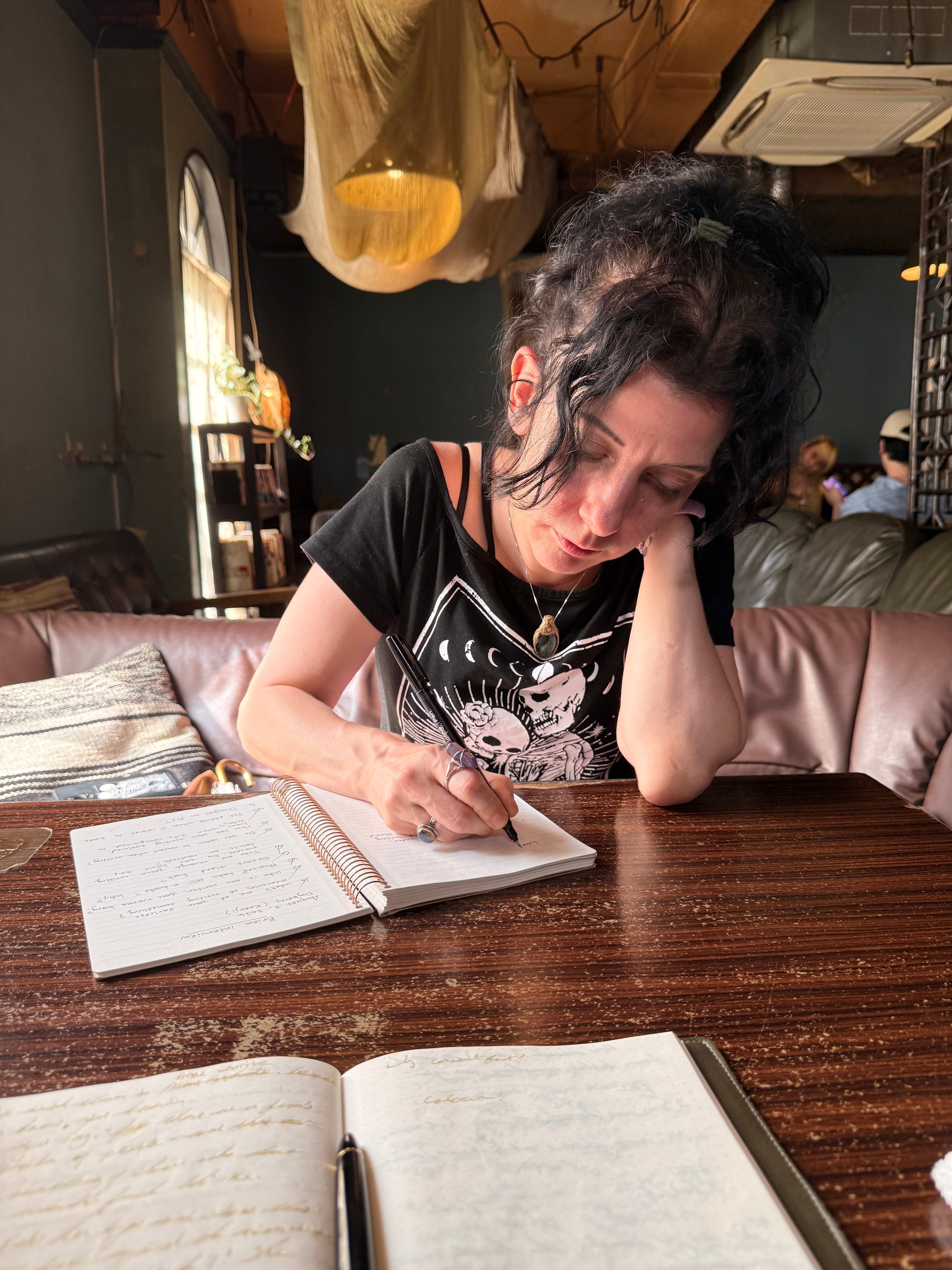
This is a bit different from my usual newsletter. I sat down with my Urban Writing Haus partner, Joy Waller, to ask her some questions about her writing life past, present, and future and what inspires her creative writing studios for Urban Writing Haus. We interviewed each other (her interview of me will be posted on her “Tokyo Notebook” newsletter). We chose a cool café, Dogberry, in the cool Tokyo neighborhood of Koenji on a very not-so cool August day.
Brian: So Joy, first question.
Joy: Yes.
Brian: Do you recall a first memory regarding poetry?
Joy: Yes. My mother was taking an adult education course at the local university. She had this book called 20th Century Poetry and Poetics, and I was about 10 years old at this time. I read a bunch of the stuff in it. Most of it flew over my head, including Allen Ginsberg’s Howl.
I did not understand a word of that poem, but I read the whole thing. I recognized that it was something I needed access to, but knew I didn’t have access yet. Later on, when I was in university, I read the poem again, and it changed the course of my writing life.
Brian: It’s always interesting how we can enjoy something or know it is touching us in some way, but we don’t really understand it. Were there any others?
Joy: There was a poem by Sylvia Plath in it called Daddy, which was really great. It’s got a line in it that I just quoted to my husband last night... which is this: “Every woman adores a fascist.” She was a beautiful performance poet. She has a very deep, sardonic voice.
Brian: Oh, you could listen to her?
Joy: She has some recordings, yeah.
Brian: What would you say your style of writing is?
Joy: It’s a mix, but there’s definitely mystical elements. There’s a strong interest in Gnosticism. There’s a kind of a bastardized religious tinge to it—based on my upbringing—Magic realism, and the sense that nothing is what it seems. Like we’re ordinary people living in an extraordinary world. Eroticism plays a key role. Sometimes edgy, sometimes numb. Darkly humorous? A professor years ago told me I had a playful way of writing about pain.
Brian: Your poetry also has urban overtones. Could you tell us why that is?
Joy: I grew up in extreme isolation on a mountain in the Canadian wilderness. It was a lonely, un-stimulating childhood in many respects. I longed to host salons in Paris. I never felt comfortable in mountains and the wilderness. So, as soon as I could, I moved to a city when I was 17. A few years after that, I moved to this megatropolis of Tokyo. The city and the urban landscape have always made me feel safe. It’s the opposite of the wilderness. There’s people here. People are safety. And I don’t even have to talk to them. I just have to know that they’re here, and that gives me a sense of security. I don’t like feeling alone. And sometimes I wanna be alone in a crowd. You know?
Brian: That’s exactly how I feel. Rural scares the shit out of me. I wanted to get out as soon as I could. Nothing bad happened, just a feeling.
Joy: It’s so pretty, but just for a weekend or afternoon.
Brian: That’s more than enough. The next question is an easy one. Who are your favorite poets or writers in general?
Joy: Good question. Well, the two I mentioned. Allen Ginsberg and Sylvia Plath would be my two favorite poets. I also really admire Sylvia Plath’s fiction. The Bell Jar is one of the great novels of the 20th century, in my opinion.
I was really influenced by the Beats—Allen Ginsberg as I mentioned, and particularly Jack Kerouac. A reviewer once described my poetry as having a “neo-beat sensibility”, and I treasure that! Anais Nin, a fantastic diarist and a writer of smutty erotica at times to pay the bills, is an influence, too. I really love the psychological femininity she brings to her craft because she was writing in the 1940s and 50s, at a time when this really masculine, Hemingway-dominated style was in vogue — perplexingly, I also really adore Hemingway — but Nin, she was this beautiful, petite, makeup-obsessed woman writing deep insights about fractured femininity and sophisticated sexuality. A true iconoclast.
Brian: If you could meet a writer, who would that be? Would it be one of the ones you just mentioned like Plath or Nin?
Joy: Dead or alive?
Brian: Either.
Joy: I would meet Albert Camus because I find him extremely sexy, and I admire his books, especially The Plague. He also was writing in that time when feminine thought was very denigrated; very few people took it seriously.
And what I love about him is that he claimed, or one of his characters claimed, something like “I would rather have one meeting with a pretty chorus girl than ten conversations with Einstein.” I don’t know if he would’ve wanted to intellectually talk to this hypothetical woman or not, but it just seemed like such a gallant thing to say, such a non-sexist thing to say when everybody else was being so casually sexist. Plus, he’s hot.
Brian: But not an intellectual woman, huh?
Joy: He said a pretty chorus girl, it’s true... Maybe an intellectual one too?
Brian: You read physical books. So, what’s your reasoning in this era of e-books?
Joy: I always read physical books growing up, of course, then e-books became popular when I was in my late 20s. I was traveling a lot for work at the time. I was taking airplanes to Hokkaido a lot. So, I did get an e-reader then because books are heavy. But it just never clicked. I never felt like I could get immersed in the story as much through the screen.
I don’t have any axe to grind with e-books or anything like that. I wanted it to work for me. But I just felt like there was an extra layer added between me and the content. I wish it weren’t so. I’m also a collector. I have hundreds of books in my house, and I like how they look, and I like how they smell and feel.
Brian: Space is the problem for me. The ever-present problem in Tokyo. But I would love to have an old-school library-den type of room. Let’s move on to Urban Writing Haus. Could you tell us how you get the ideas for your studios?
Joy: For my first two studios, I thought of things that I was currently obsessed with, so one was mythology and the other was the conbini (convenience store). I’ve always wanted to write a whole book about conbinis.
I then took a look at my most recent book of poems and looked at the titles of all of those poems; there are about 40 titles. I looked for recurring themes and found that fragments was a theme, and self-identification was a theme, and feelings and atmosphere were themes. So, yeah. Cannibalizing my past work.
Brian: And what do you hope Urban Writing Haus will become in the near future?
Joy: That’s such a good question, and I have spent a lot of time thinking about it. I would like it to become a place, a cozy place that people feel welcomed at; a home away from home, a creative home. It’s called Urban Writing Haus partially for that reason. In modern society and in this megatropolis, we’re all in our separate apartments and houses, and we don’t meet up as often as we used to when we were younger. So, it’s nice to have a second home filled with creatives, and I’d love for it to morph even more into that. I think it’s got the seeds of it there now.
Brian: So, it’s fulfilling your dream of a Parisian salon.
Joy: It is!
Brian: What brought you to this megatropolis of Tokyo from Canada?
Joy: It is not an interesting story. I had finished university. I was broke, and I wanted to travel. I couldn’t travel because I was broke, so I thought I’d go teach English in another country for a year, then go to another country and teach English there for a year. So, I had a list. I was going to go to Japan first and then China and then Poland. But Japan was first, and one year extended to two, then extended to five, then to ten, then to... I just fell head-over-heels in love with Tokyo.
Brian: Let’s go a bit more micro now. Where is your happy place?
Joy: My happy place is curled up in bed with my husband on one side, my brown tortoiseshell cat at the left-side foot of the bed, and the black cat at the right-side foot of the bed. So there’s all four of us just getting cozy and chilling together, and we’re watching crime documentaries. That is my happy place.
Brian: What’s the crime documentary you’re watching now, if any, or recently?
Joy: It was called Toxic City. It’s about toxic landfill getting spread all through local neighborhoods due to negligent work practices, and a bunch of babies were being born in this small British town with horrific birth defects. It’s clear what happened and who was to blame. But for many, many years, this court case dragged on, and the city council were trying to deny it to the end.
Brian: Getting back to writing. Do you write every day?
Joy: I don’t write every day. I’ve sometimes gone through periods of my life when I do. I used to do the Morning Pages, which is a fantastic habit that everyone should try, and I am gonna get back to it.
I sometimes do rage journaling, which is where you just write everything you’re pissed off about, then it’s out of the way. A few times a year, I do writing challenges. One poem every day for January, for example—and then I write every morning, because I have to. But I often have difficulty with motivation.
The antidote is to make little challenges for myself, or ideally challenges that include others, so then we can hold each other responsible. I have a monthly poetry open-mic night that I co-host, Drunk Poets See God, and I try to write something new for that every month. So that’s my monthly deadline.
Brian: Yeah, sometimes restrictions kill creativity.
Joy: Yeah, right?
Brian: Could you tell us more about Drunk Poets See God?
Joy: It’s an incredibly eclectic, inclusive, zany type of night. It’s been going on for about 13 years, held at Bar Gar Gari in Ikenoue once a month. Anybody can perform. It’s usually poets, but we also have musicians and other performance artists. It’s an open-mic night in a general sense, but it is also a community. People have been coming there for years, and it’s a very supportive group. Nobody is judging the performances. People are there to have a good time and be entertained and to support up-and-comers. We’ve got some older people who are regulars and also some really young people who come for the first time, and some of them stick around. They find the home they’ve been looking for.
Brian: I like the eclectic vibe it promotes. I see you as primarily a poet, but do you see yourself that way? And are you writing anything in prose?
Joy: That’s a good question. I see myself primarily as a poet too because that’s what I’ve produced the most of. My two published books are poetry collections. But my love is fiction, short fiction specifically. But for years, I’ve had a lot of difficulty really staying focused on short fiction. I’m really interested in memoir. I read a lot of memoirs. So, I’d like to not necessarily write my own memoirs (yet), but maybe some nonfiction essays about my past could be interesting.
Brian: I feel that short stories, even flash fiction is having a moment. OK. Switching to something lighter. What’s your favorite color and why?
Joy: Purple, because it is royal, and magical, and mystical.
Brian: Finally, some quick-fire questions.
Joy: Okay.
Brian: Literary or genre?
Joy: Literary, of course.
Brian: Tea or coffee?
Joy: Coffee.
Brian: Earth tones or neon?
Joy: Neon.
Brian: Noise or silence?
Joy: Silence.
Brian: Okay. That finishes this interview. Thank you for your interesting responses.
Joy: Thank you so much, Brian.
Joy Waller is co-founder of Moon Hotel Press, co-host of Drunk Poets See God, editor at Tokyo Poetry Journal, and co-founder of Urban Writing Haus creative writing workshops. She is the author of poetry collections Pause :: Heartbeat and Cosmic Nervosa. She currently works as a freelance editor in Tokyo. joywaller.com